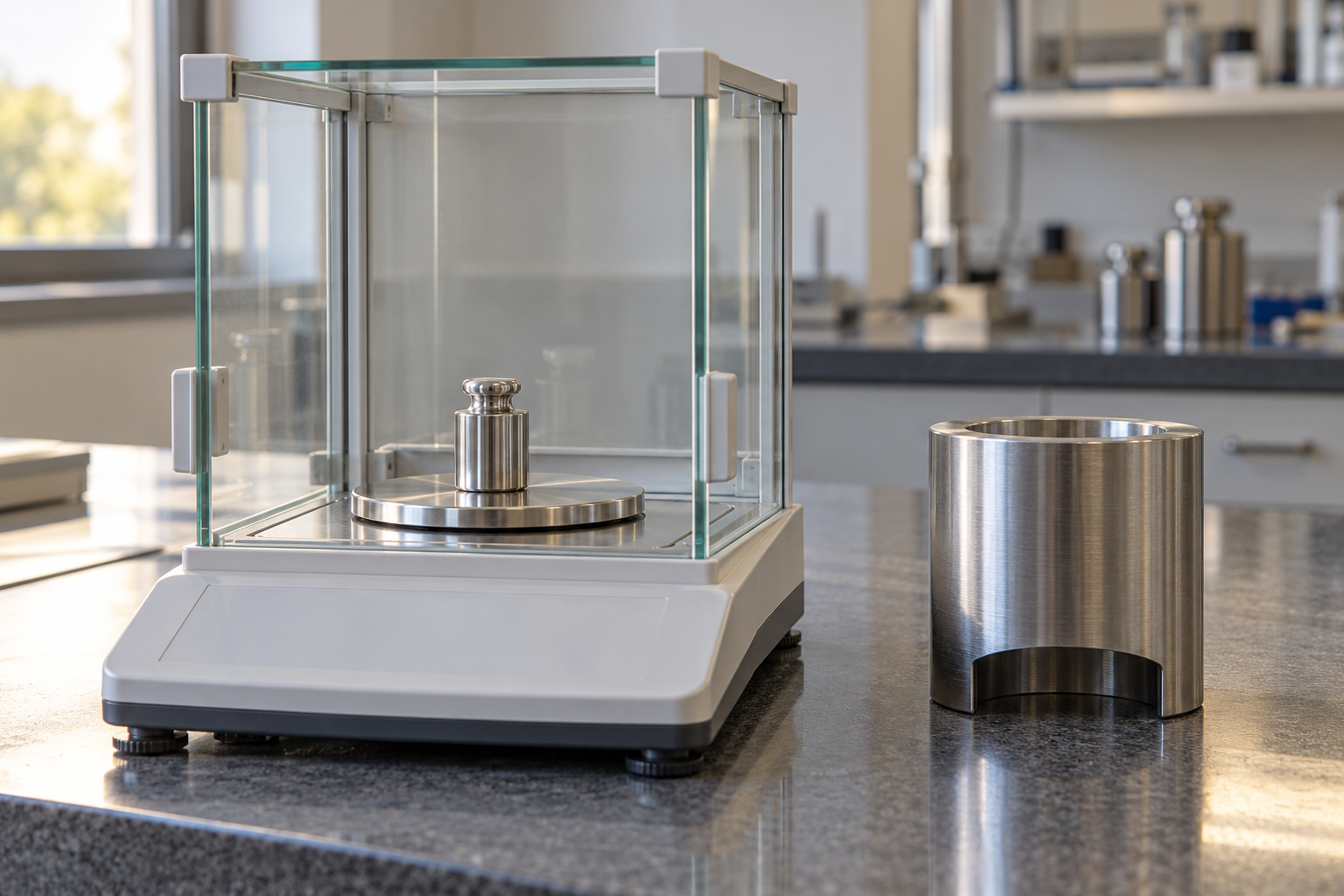
How a balance notices the surrounding air
Two equal-mass objects can pull differently on a balance in air. Their volumes, the local atmosphere and the reference weight explain when that difference matters.
A place for slower thoughts
The instruments and reference standards behind everyday numbers.
Words by Dara Quinn
Two equal-mass objects can pull differently on a balance in air. Their volumes, the local atmosphere and the reference weight explain when that difference matters.
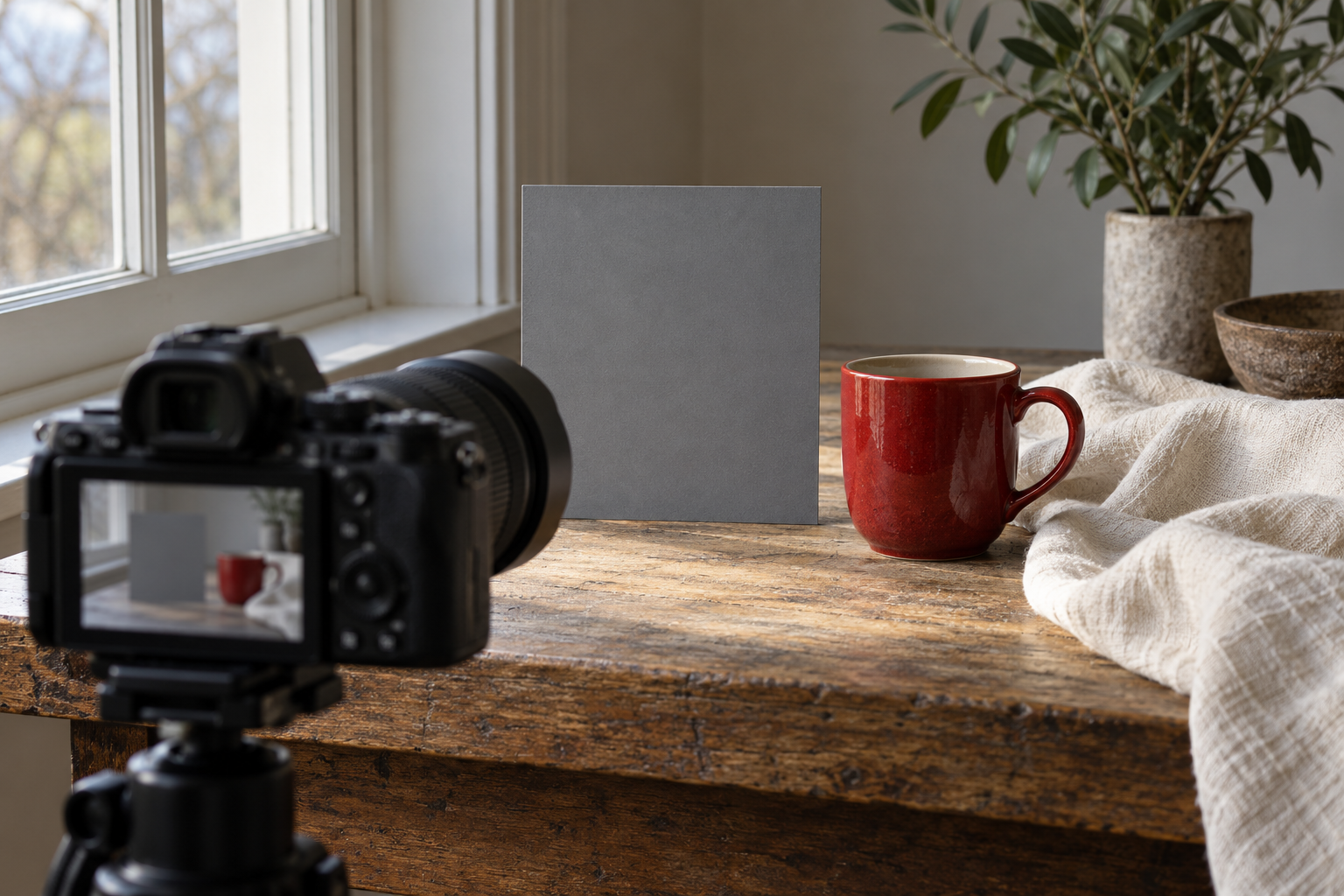
White balance begins with a deceptively simple fact: how a genuinely neutral card looks under the subject's light. That anchor steadies colour, but it cannot solve mixed lighting or replace a full camera profile.
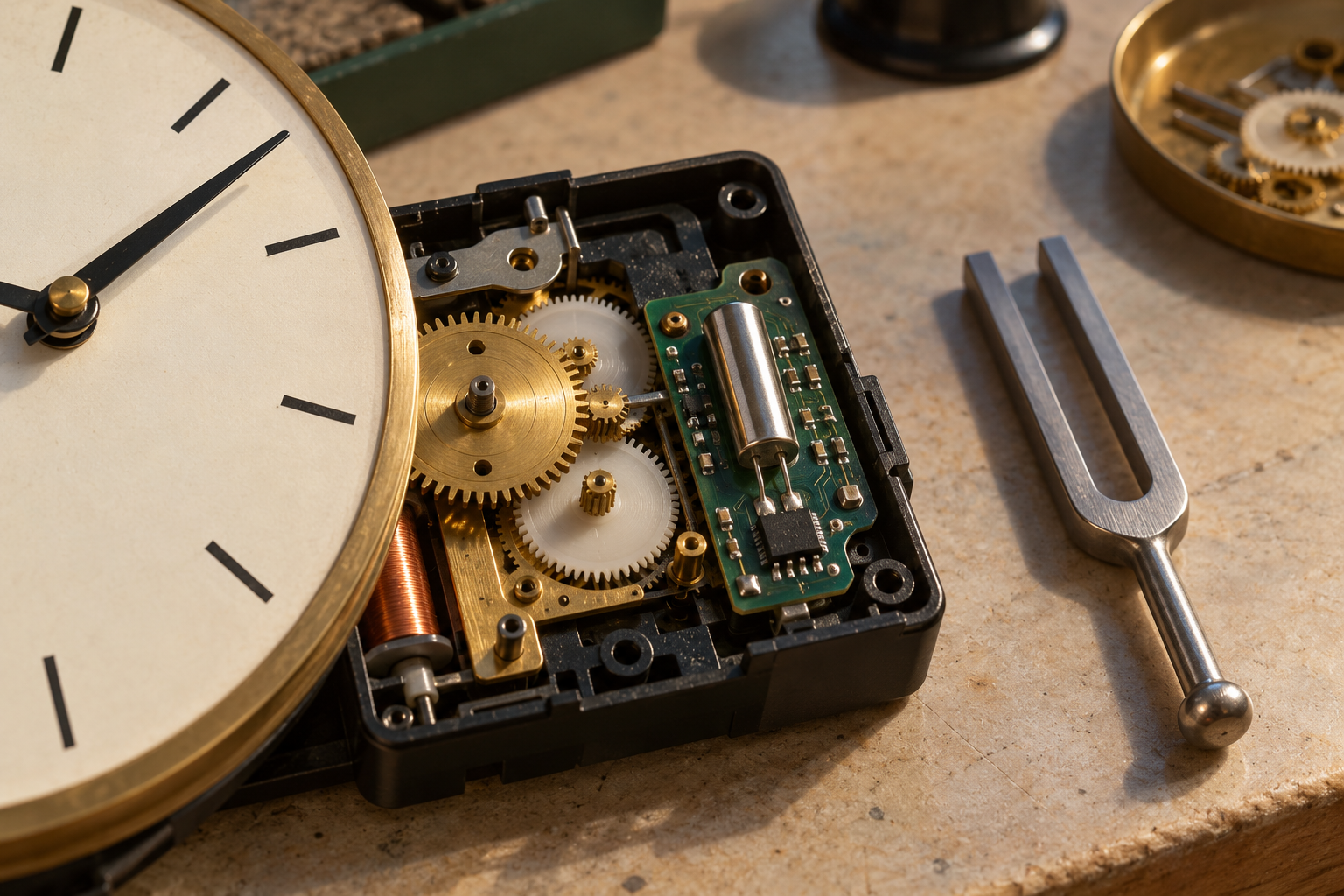
Setting a clock and keeping it on time are different jobs. Its oscillator supplies the ticks, while comparisons with a frequency reference show whether those ticks make honest seconds.
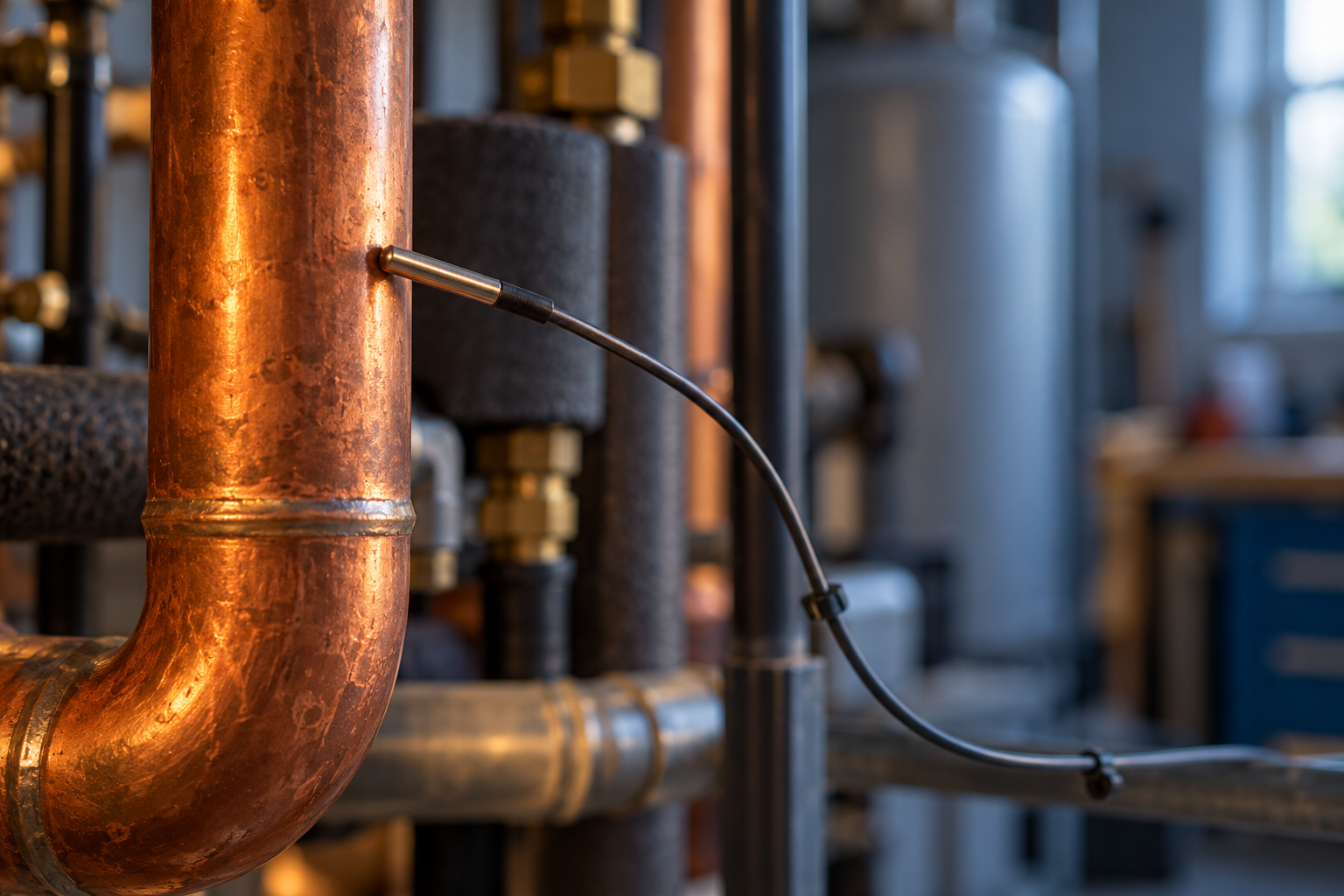
A contact thermometer measures its sensing element. Its reading represents a pipe, liquid or patch of air only when placement, heat paths and settling time make that element a faithful stand-in.
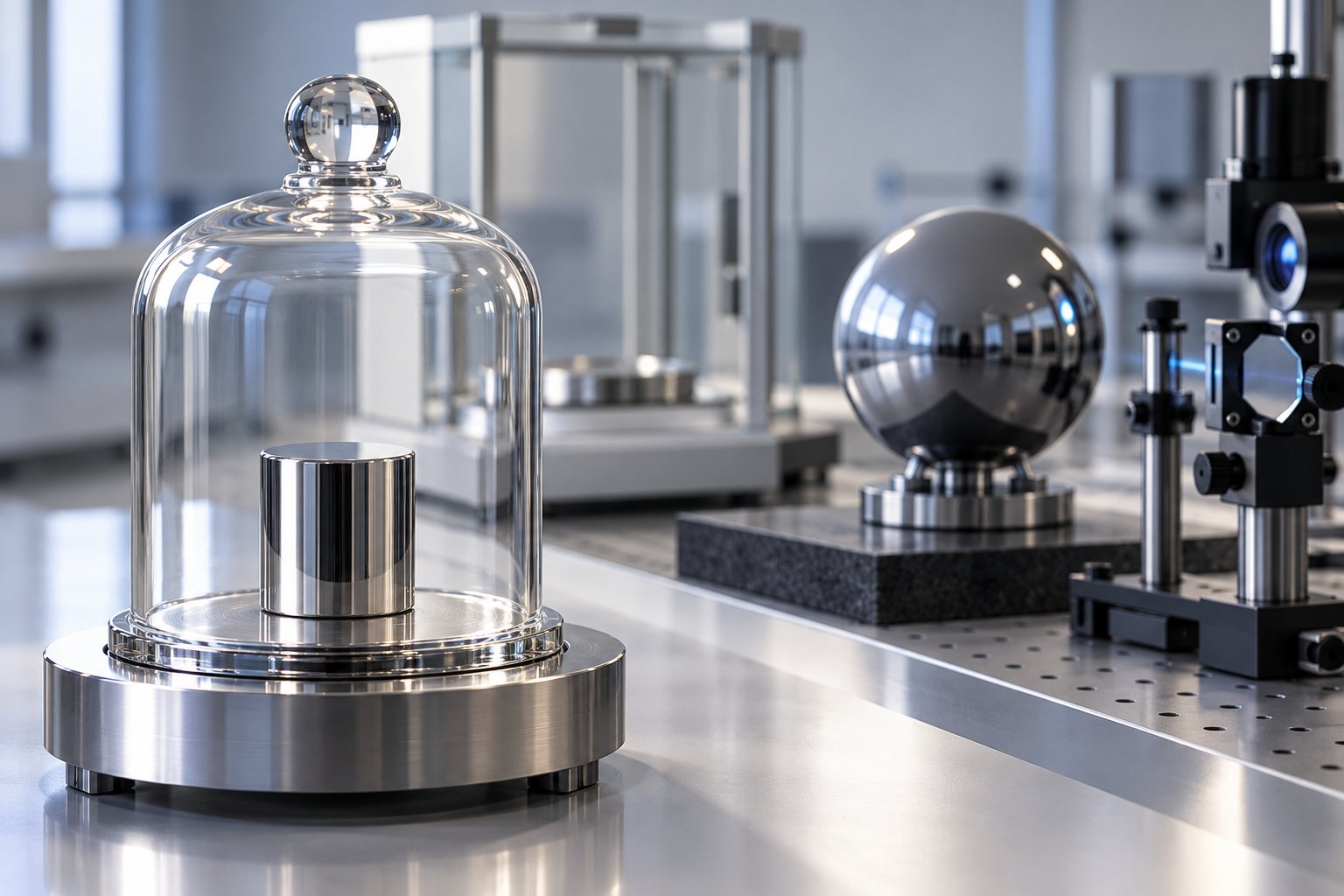
The world's kilogram stopped being defined by one guarded cylinder in 2019. Its new constant is exact, but turning that definition into a working mass still requires balances, silicon crystals, comparisons and careful transfer.